Slapton Sands
The Unlikely Pilgrimage of Harold FrySlapton Sands is a stretch of coastline in the South Hams district of Devon, a landscape of shingle beach, sea, and a freshwater ley separated by a narrow spit of land. In the novel it appears at a crucial juncture in the parallel narratives of Harold Fry's walking pilgrimage and his wife Maureen's gradual emergence from the frozen grief that has defined their marriage. It is not a place Harold himself passes through on his journey north; rather, it is where Maureen goes, driven by her neighbor Rex, and where the emotional geography of the story shifts. The location carries the weight of memory, of a love first kindled decades earlier, and of the possibility that the couple's estrangement might not be permanent.
Setting and the Journey to the Coast
The visit to Slapton Sands comes about almost casually. Rex, Maureen's neighbor and fellow widower, drives her to the Start Bay Inn at Slapton Sands after the two have been talking about Queenie Hennessy and the past. Maureen has just confessed that she heard Queenie had done something she should not have done at the brewery, and that their boss was a deeply unpleasant man who was not one to forgive and forget. The conversation has left her cold, and she hugs her arms around her waist. Rex, sensing the need for a change of scene, suggests a small sherry and then takes her to the pub. For Maureen, setting foot in a pub again is strange; since Harold became teetotal, she rarely drinks. They order an early bar meal with a glass of wine and make a toast to Harold's journey, and Maureen feels a lightness in her stomach that reminds her of being a young woman in love for the first time. The alcohol slips down her throat, cold at first and then almost burning, loosening her muscles and her guard.
The Memory of the Woolwich Dance
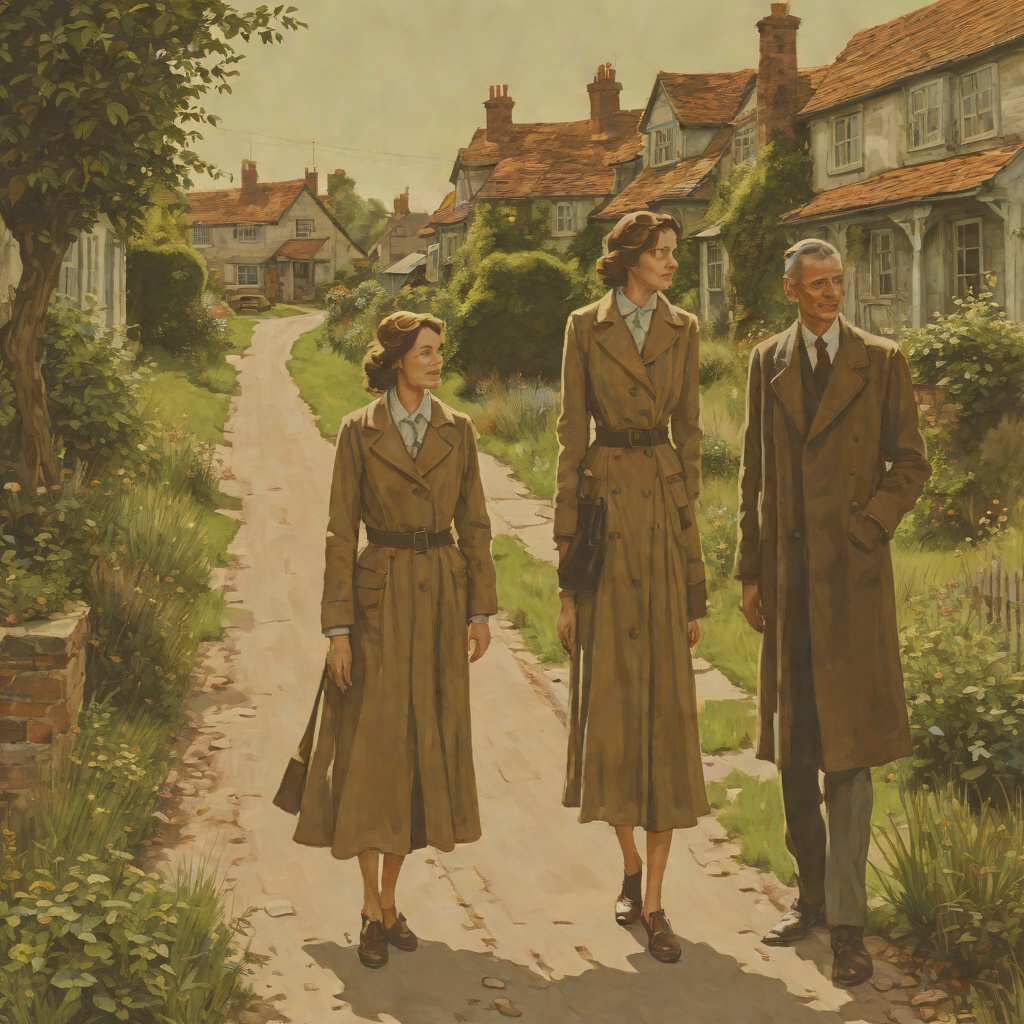
After the two drinks, while it is still light, they walk along the spit of land between the sea and the ley. Maureen feels warm inside and slightly indistinct at the edges. A pack of gulls flies with the wind, and Rex tells her that one could find warblers and great crested grebes here, adding that Elizabeth was never very interested in wildlife and said it all looked the same. Sometimes Maureen listens and sometimes she does not. She is thinking of Harold, replaying in her mind the scene where they met forty-seven years ago. Strange, she reflects, how she had mislaid the details of that night for so long. The memory returns with vivid force: she had noticed Harold straight away, could not miss him, jiving by himself in the middle of the dance floor, the flaps of his coat flying out like great dog-tooth-check wings. It was as if he were dancing something out that was locked inside himself. She had never seen anything like it; the young men her mother introduced were all stiff partings and black tie. Maybe he had sensed her watching, even across that dark, throbbing hall, because he had stopped suddenly and caught her eye. He had danced some more, and she had continued watching, transfixed by the raw energy of him, the completeness of what he was. He had stopped again, caught her eye again, then threaded his way through the crowd and halted so close she could smell the heat of his skin. The memory, recovered on the windswept spit at Slapton Sands, is the first stirring of the love that grief had buried.
Contrast with Harold's Solitary Walk
The location stands in deliberate contrast to the experience of Harold, who at the same period of the story is walking alone through the English countryside. Where Harold's journey is one of solitude, of pushing into the unknown with nothing but his yachting shoes and a plastic carrier bag, Maureen's visit to Slapton Sands is a shared excursion, taken in the company of a neighbor who listens. Harold's walk is marked by vulnerability, the fear of falling or of someone springing out of the bushes with no one to hear his cries, and by the exhilaration of freedom, of being in the world by himself with nothing to get in the way or ask him to mow the lawn. Maureen's afternoon at the coast is marked by warmth, by alcohol, by conversation, and by the recovery of a memory that had been mislaid. The two experiences are complementary halves of the same emotional arc: Harold walks forward into the unknown to save Queenie, while Maureen walks backward into memory to recover the man she once loved. Slapton Sands, with its spit of land between sea and ley, is the place where that backward journey begins.
The Significance of the Place in the Novel's Geography
The choice of Slapton Sands as the setting for Maureen's reawakening is not incidental. It is a place of thresholds, a narrow strip of land between two bodies of water, poised between the open sea and the sheltered ley. It is also a place of historical memory, a stretch of coast whose name carries associations with wartime exercises and loss. In the novel's emotional geography, it functions as a liminal space where Maureen can step outside the suffocating confines of Fossebridge Road and the house where David's room remains exactly as it was the day he died. The net curtains she put up to keep the neighbors from prying are absent here; the horizon is open. The lightness she feels in her stomach, the sense of being a young woman in love for the first time, is the first crack in the armor of grief she has worn for twenty years. The location thus prepares the ground for the later reconciliation at Berwick, when Maureen will whisper to Harold that she loves him and call his act of walking a small miracle. Slapton Sands is where the possibility of that ending first becomes visible, a place where the past is not a prison but a source of renewal.